See exactly what you'll receive
Scroll through a complete, real Queensland home-education report — every page, exactly as it's built.
Built to meet Queensland Home Education requirements · Backed by free revisions until your report is accepted
 ⤢ Click to flip through ›
Flip through a real, complete package
Complete full report + parent handout.
Want to see the report in more detail?
The section below is a complete, real report — page by page, in the exact order it appears in the document — with explanations of what we do and how we do it.
See it in detail ↓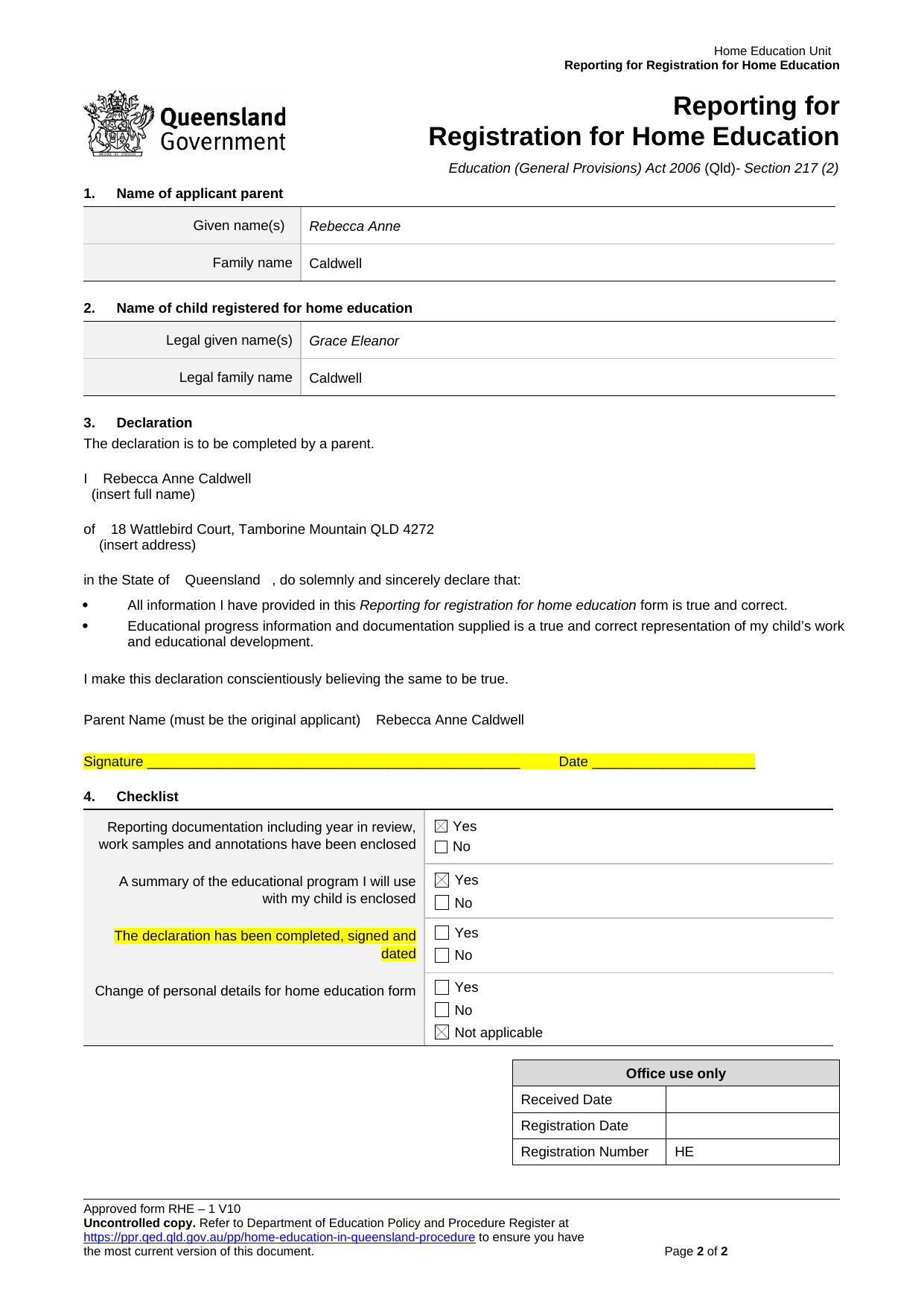
The official form & declaration
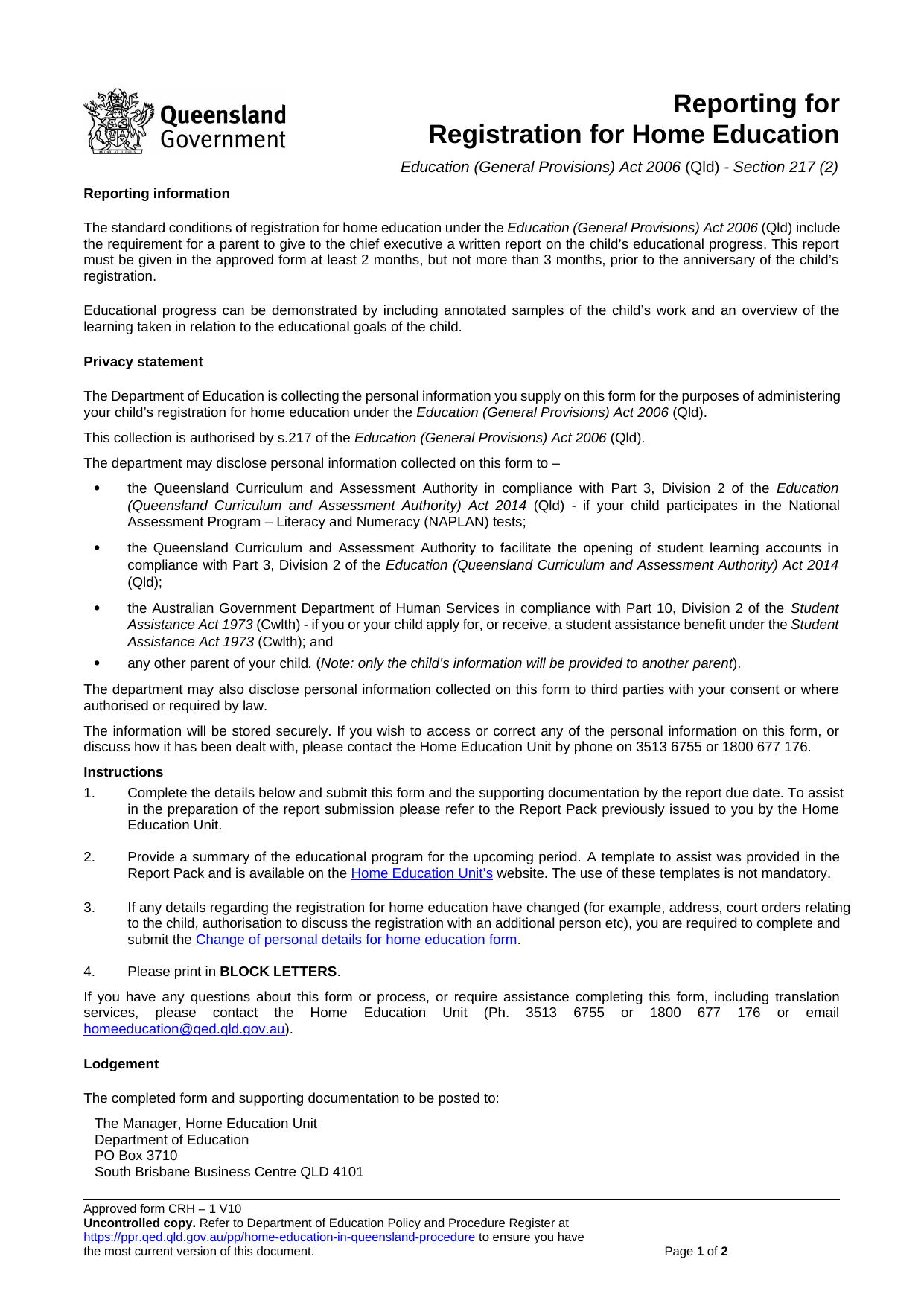
Your report opens with the genuine Queensland form — filled in, ready for your signature.
What it is
The first two pages are the actual Queensland Home Education reporting form and the parent declaration — the official document the Department expects to receive.
How we make it
We take the genuine form file and fill in your details. We never retype or recreate it, so the official wording, logo and layout stay exactly as the Department issued them. The only things left blank are the signature, the date, and the declaration tick — highlighted in yellow for you.
Why this way
Recreated forms look "off" to an assessor and can raise questions. Using the real form, untouched except for your answers, signals a careful, legitimate submission from the very first page.
Why it meets the requirements
Lodging on the approved form is what the Department asks for. We leave the declaration for you to sign by hand because the law requires the parent — not us — to declare the information is true and correct. That's a feature: it's your report, in your name.
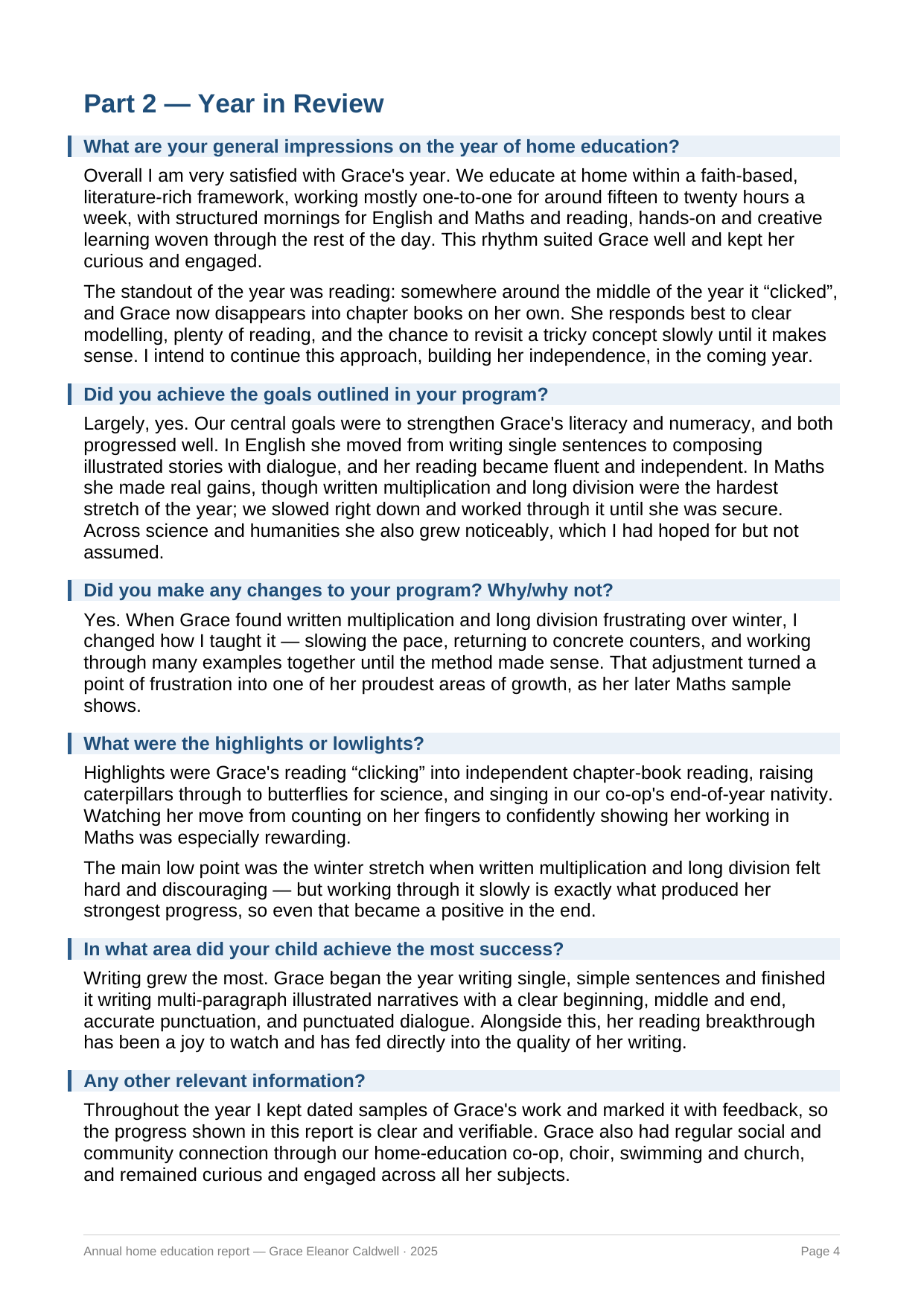
Year in Review
A reflective, honest write-up of your year — in your voice, in the Department's own six questions.
What it is
A written reflection answering the six questions Queensland Home Education asks every parent — your general impressions, whether you met your goals, what changed, your highlights and lowlights, where your child grew most, and anything else relevant.
How we make it
We use your answers and your work-sample notes to write substantial, specific paragraphs — naming real skills, resources and moments. We keep your voice, and we're honest about what was hard as well as what went well.
Why this way
Assessors can tell the difference between a genuine reflection and padding. Honest writing that names specifics — and acknowledges challenges alongside progress — reads as credible and reassuring.
Why it meets the requirements
These are the Department's own questions, answered in full prose rather than one-liners — directly supporting the assessor's job of being reasonably satisfied that real, quality education took place.
"The standout of the year was reading: somewhere around the middle of the year it 'clicked', and Grace now disappears into chapter books on her own."
Work Samples — proving real progress
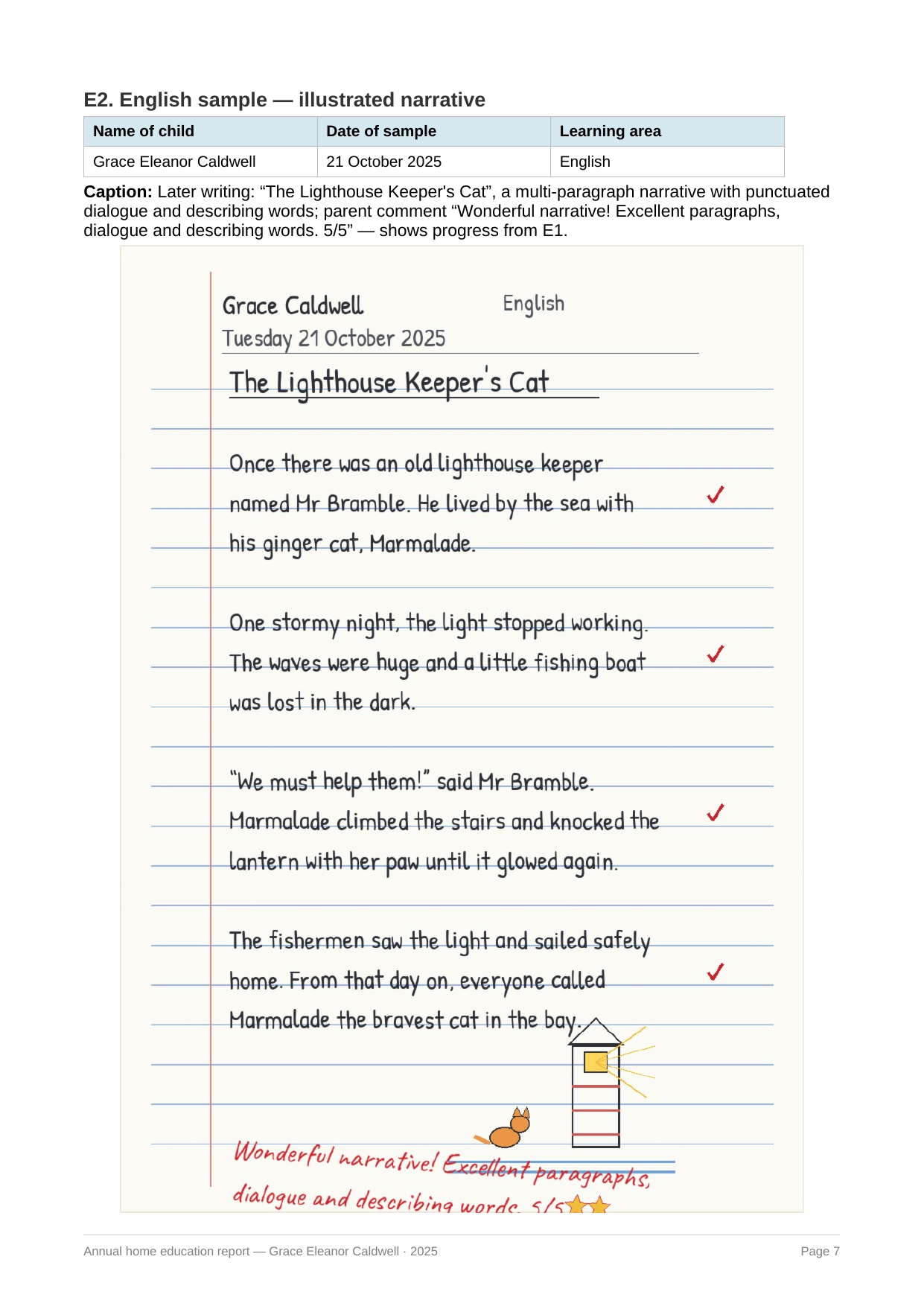
For each subject we pair an earlier and a later piece of your child's own work — then do the careful analysis that proves the growth between them. This is the heart of the report, and the part we take off your hands.
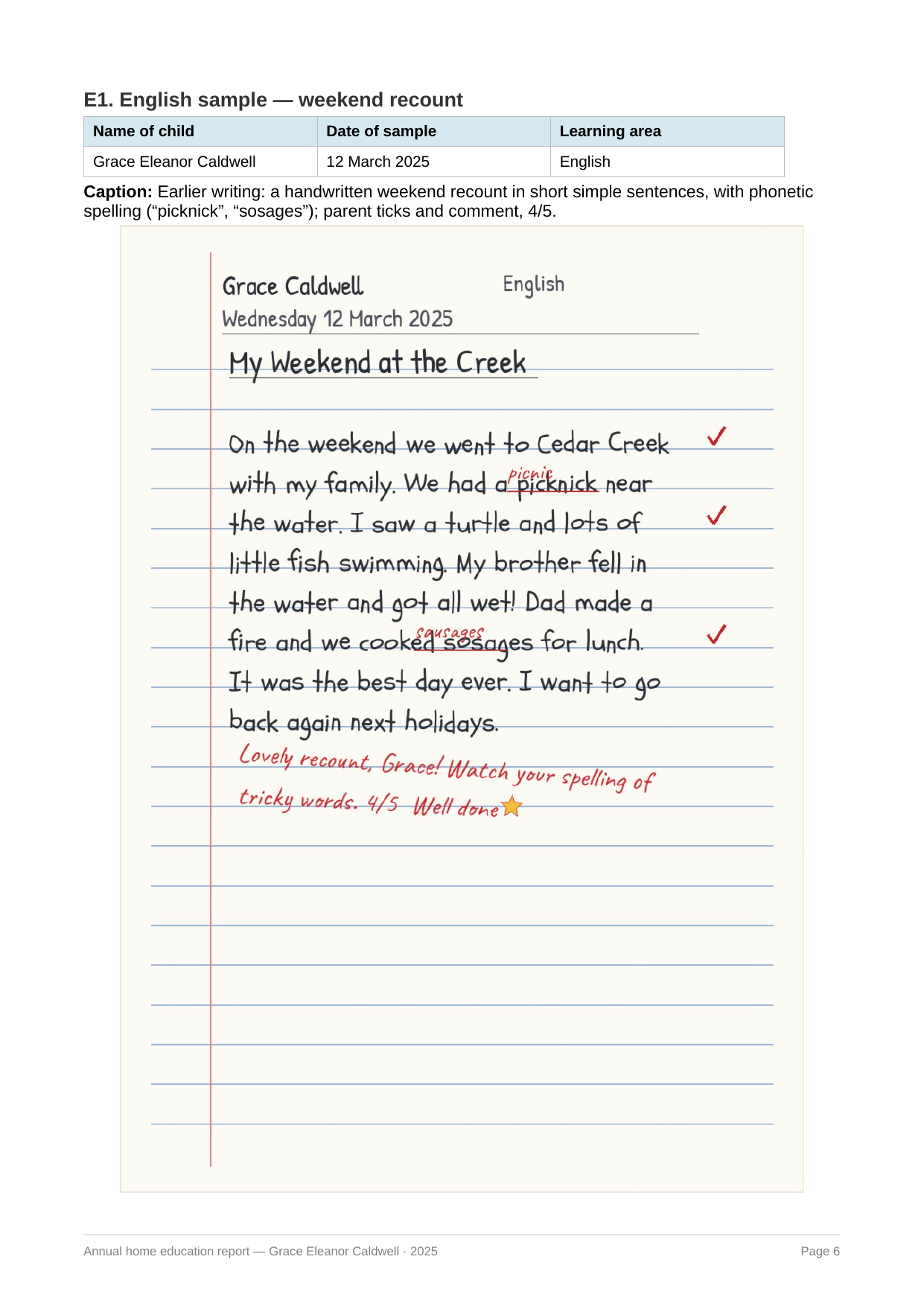
We don't just place two photos side by side and leave the rest to you. For every subject, we:
- Study both pieces closely — reading the actual work, not ticking a checklist, to find exactly what changed.
- Write a comparative analysis — a precise "moved from X → to Y" statement that names the specific skill that advanced and cites both samples by date.
- Judge and state the level — above, at, or below age equivalence for that subject.
This comparative analysis isn't part of the official template — it's work we create for you, and it's the part that turns nice work into evidence of progress an assessor can accept. It's also the piece most parents find hardest and most time-consuming to write themselves.
Each photo fills its own page in the report, so your child's work is large and easy to read. See the written analysis we produce for every subject →
Why it meets the requirements
A Queensland Home Education report is approved when the assessor is reasonably satisfied about the child's educational progress. Progress is proven by comparing dated samples of the same skill and stating how the work advanced. Every subject we sample is built around that earlier-to-later comparison.
Where the progress is named
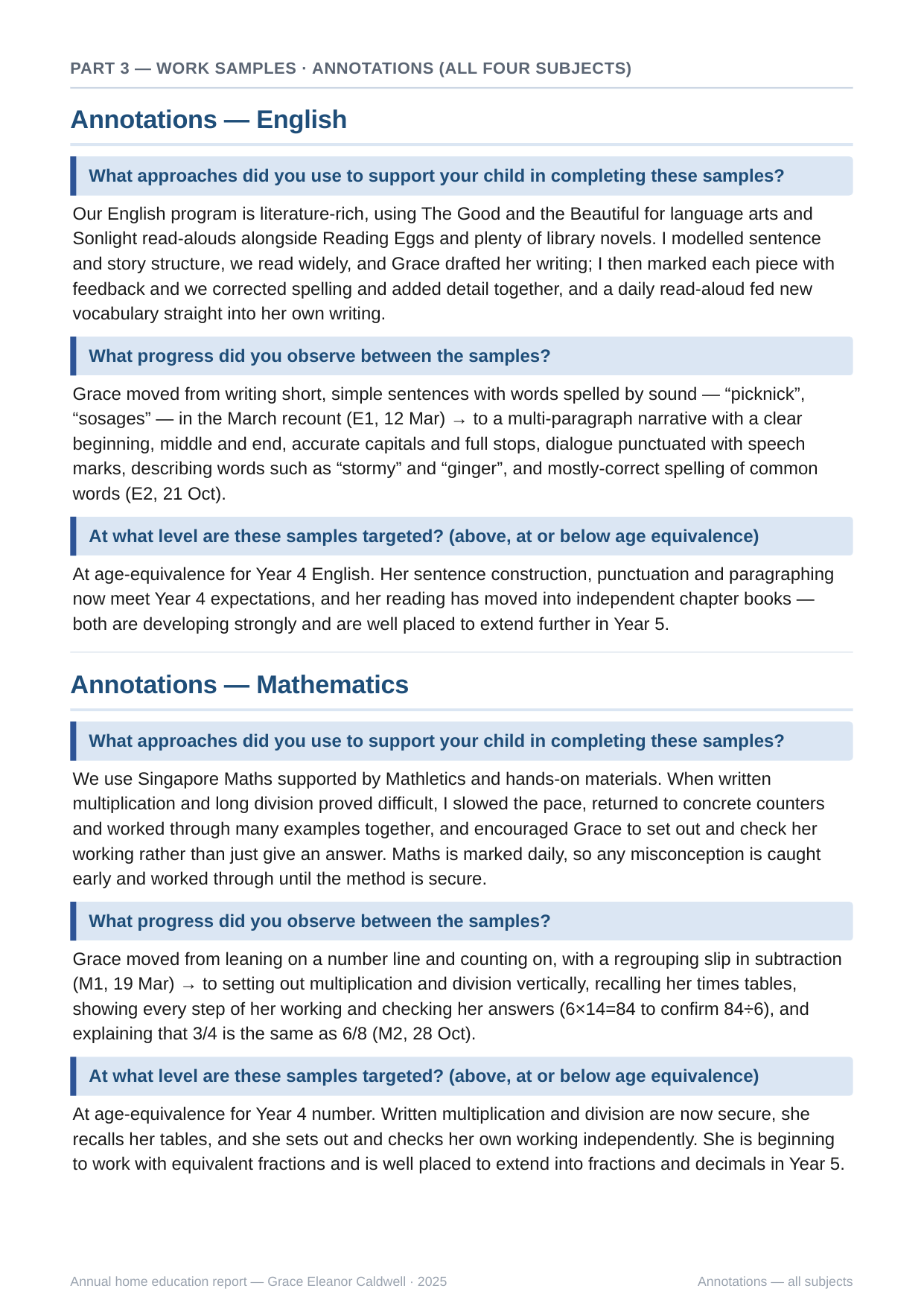
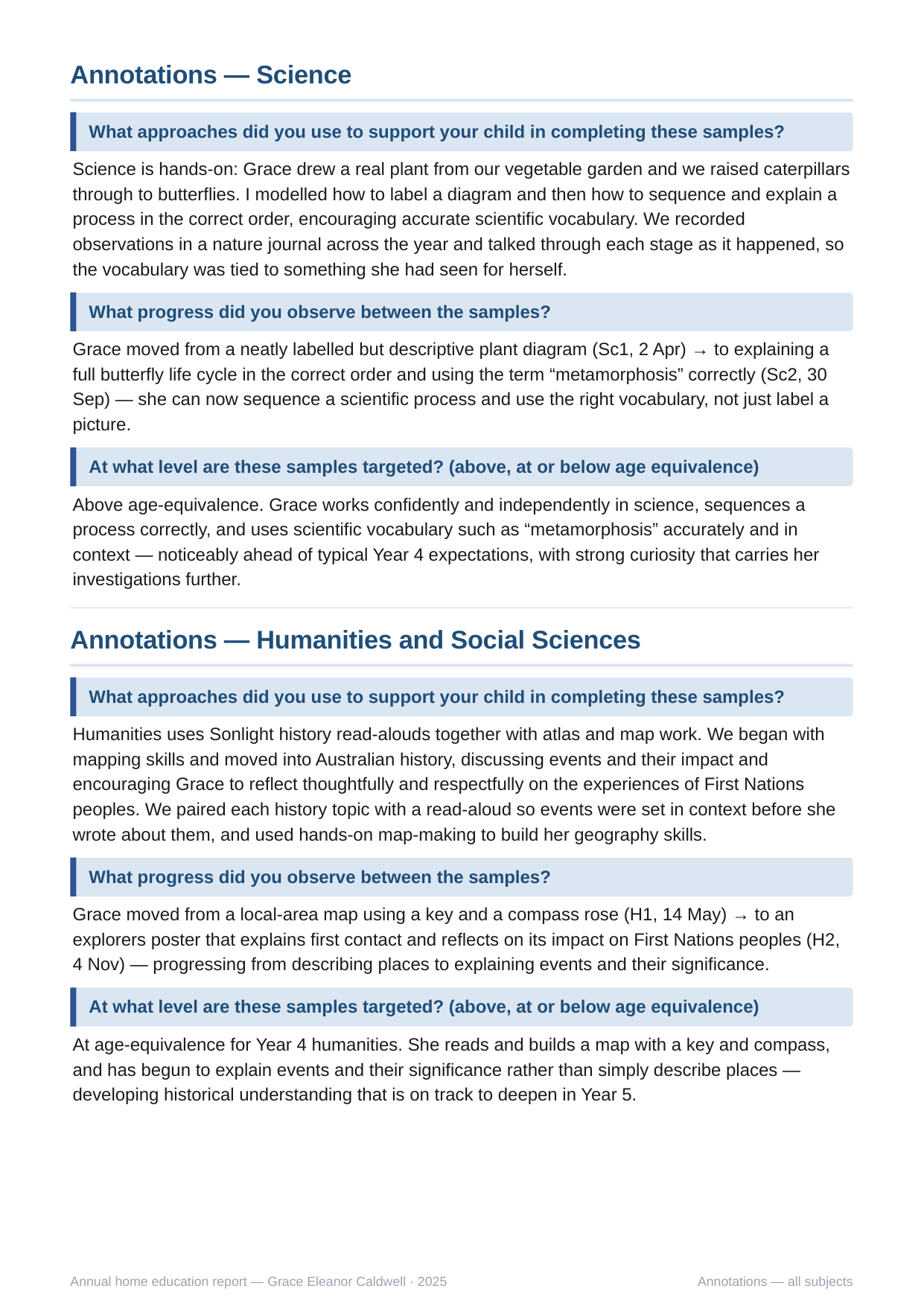
The samples show the work. The annotations explain the growth — in plain words, for every subject. This is the part an assessor reads most closely.
What we write
For each subject we answer three set questions: the teaching approaches used, a comparative analysis of the progress between the two samples, and the level the work sits at (above, at, or below age equivalence).
How we do it
We read the actual work and write each answer from scratch — naming the specific skill that moved forward and citing both samples by date, so every claim is concrete and checkable, never a vague "improved".
Why it matters
A photo proves the work exists; this written analysis proves it's progress. It's the most persuasive part of the report — and the part that's slowest and hardest to write well yourself.
Why it meets the requirements
The comparative "progress between the samples" statement is the load-bearing point of the report: it directly addresses the assessor's test of being reasonably satisfied about the child's educational progress. We make sure every subject carries it, plus the required age-level judgement.
- 1What approaches did you use to support your child in completing these samples?
- 2What progress did you observe between the samples? — written as a "moved from X → to Y" comparison
- 3At what level are these samples targeted? (above, at or below age equivalence)
In the full report each subject's annotations sit on their own page — here we've gathered all four together so you can read the analysis for every subject in one place.
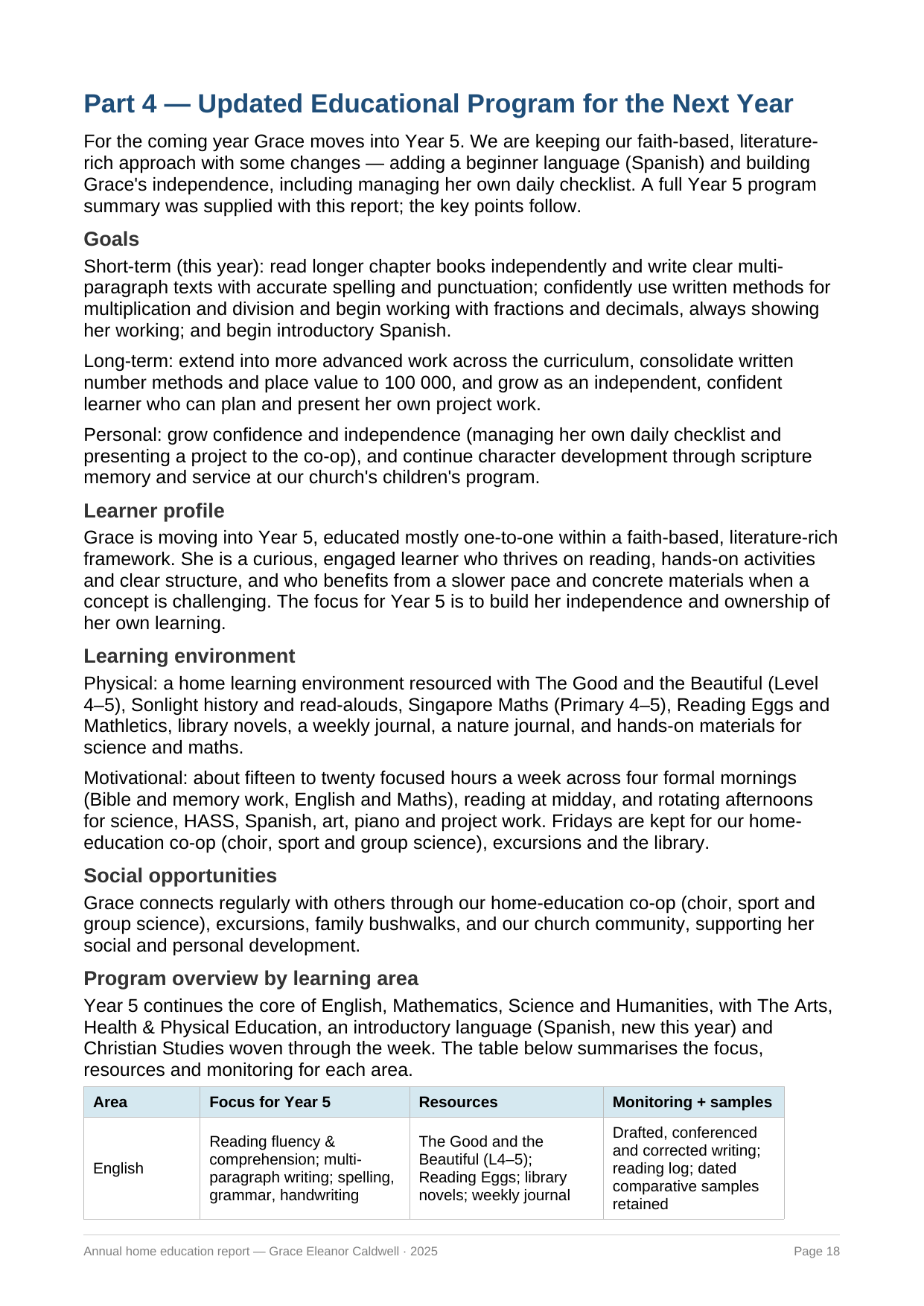
Your program for next year
A clear, forward-looking plan — what you'll teach, with what, and how you'll track progress.
What it is
A summary of next year's plan: your goals (short-term, long-term and personal), your child's learner profile, the learning environment, social opportunities, and a subject-by-subject table of what you'll teach, the resources you'll use, and how you'll monitor progress.
How we make it
We build it from your plans and the year you just described. The forward-looking parts use clear, standard commitments — like collecting dated samples each term — while every detail specific to your child comes only from what you told us.
Why this way
A strong program shows the year wasn't accidental — there's intent, structure and a way to know it's working. The monitoring column names the very samples you'll collect for next year's report.
Why it meets the requirements
The Department expects a summary of the educational program for the coming period, responsive to your child's age, ability, interests and needs. Part 4 covers each of those, and ties the plan to how progress will be evidenced next time.
"For the coming year Grace moves into Year 5… adding a beginner language (Spanish) and building Grace's independence, including managing her own daily checklist."
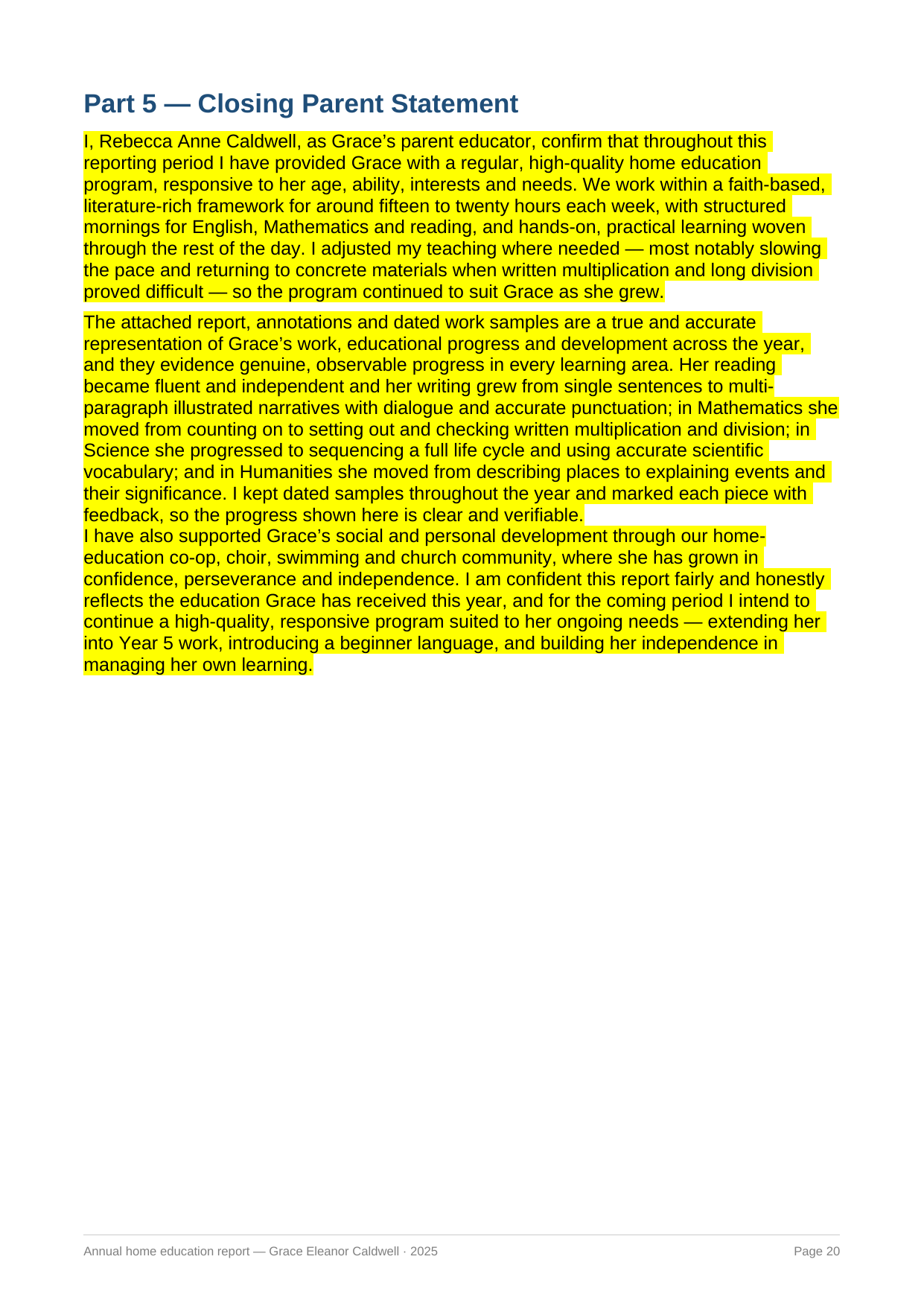
Your closing statement
A short, honest summary in your voice that ties the whole report together — for you to read and confirm.
What it is
A brief first-person statement confirming you provided a regular, high-quality, responsive program this year; that the report and samples truly represent your child's work and progress; and that you intend to continue. It's highlighted in yellow because it's yours to read and approve before you sign.
How we make it
We write it from what your report already shows — never over-claiming, never asserting anything the evidence doesn't support. It reads like you, because it's built from your year.
Why it meets the requirements
It restates, in plain language, the things the assessment turns on — quality education provided, genuine progress evidenced, a responsive program, and support for social and personal development — each tracing back to evidence already in the report.
"I, Rebecca Anne Caldwell, as Grace's parent educator, confirm that throughout this reporting period I have provided Grace with a regular, high-quality home education program, responsive to her age, ability, interests and needs…"
And the guide that makes it effortless
Your second document. Personalised to your child, written for you — so the moment the package lands, you know exactly what to do.
No unanswered questions
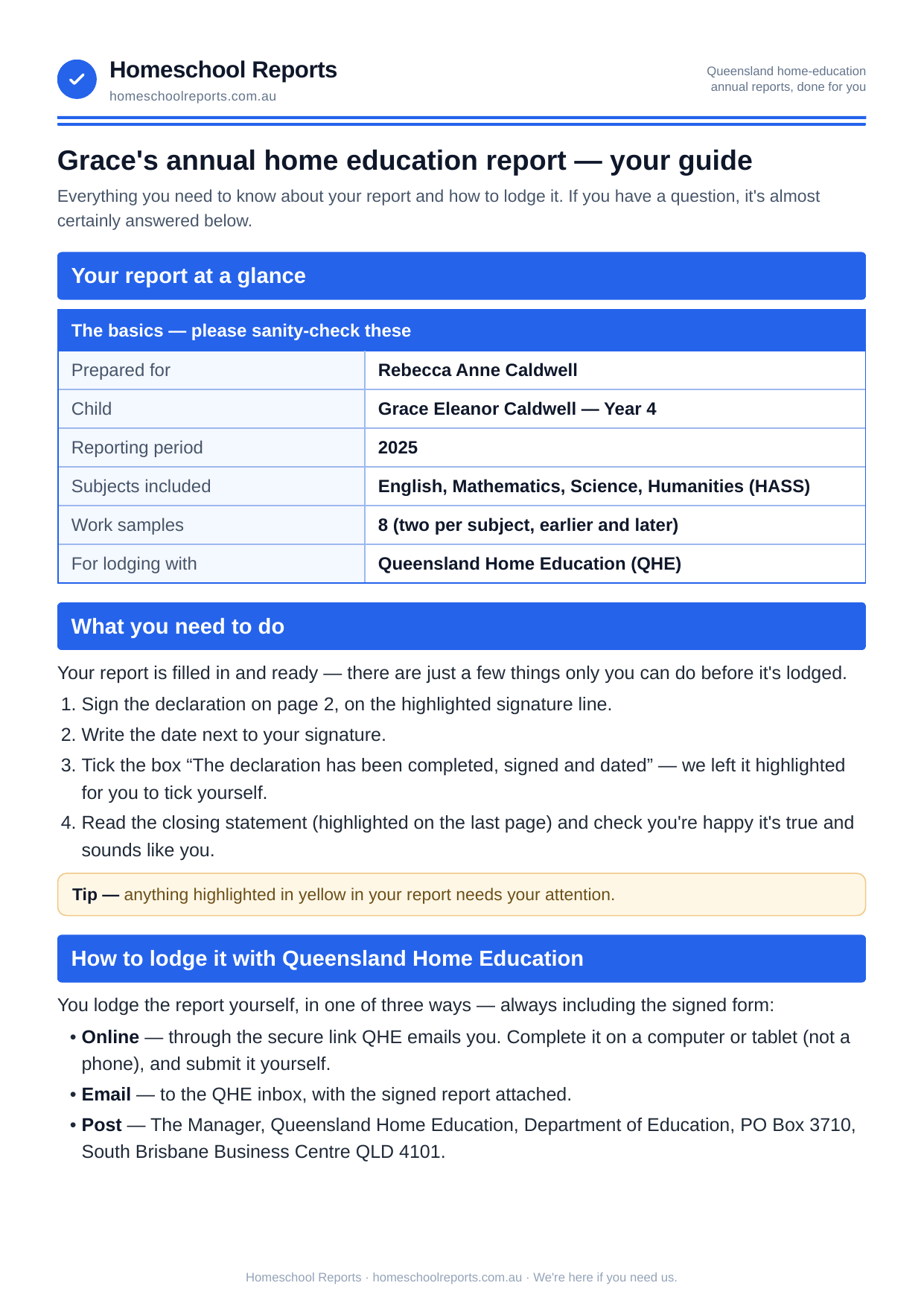
A warm, plain-English walk-through of your report and how to lodge it.
What it is
A short, friendly PDF made just for you: an at-a-glance summary to sanity-check the basics, the few steps only you can do, how and when to lodge with Queensland Home Education, a plain-English tour of what's inside, this year's genuine highlights for your child, and a quick FAQ.
How we make it
It's personalised from your order — your child's name, year level, subjects and real highlights — built from the same evidence as the report. Nothing generic, nothing invented.
Why it matters to you
It answers "what do I do now?" before you have to ask — when it's due, how to lodge it, what the yellow highlights mean, and how to reach us.
Built to meet the standard — and built around you
Every report is structured to meet Queensland's requirements, made only from your child's real work, and backed by free revisions until it is accepted.
Built to meet Queensland Home Education requirements
Structured around Queensland's current reporting requirements, every time.
Comparative, dated evidence
Earlier-and-later work samples, dated and annotated so progress is visible.
Your words, never invented
Every detail about your child comes only from what you submit.
Free revisions until accepted
If Queensland Home Education asks for changes, we revise your report at no extra cost until it is accepted.
Queensland specialists
We focus on the Queensland process.
Your data stays yours
Used only to create your report, in line with our privacy policy.